01 – Project Overview
Role
• Sr Experience Designer at McDonald’s
Duration
March 2024 – October 2024
SKIP TO THE FINAL PRODUCT
BACKGROUND
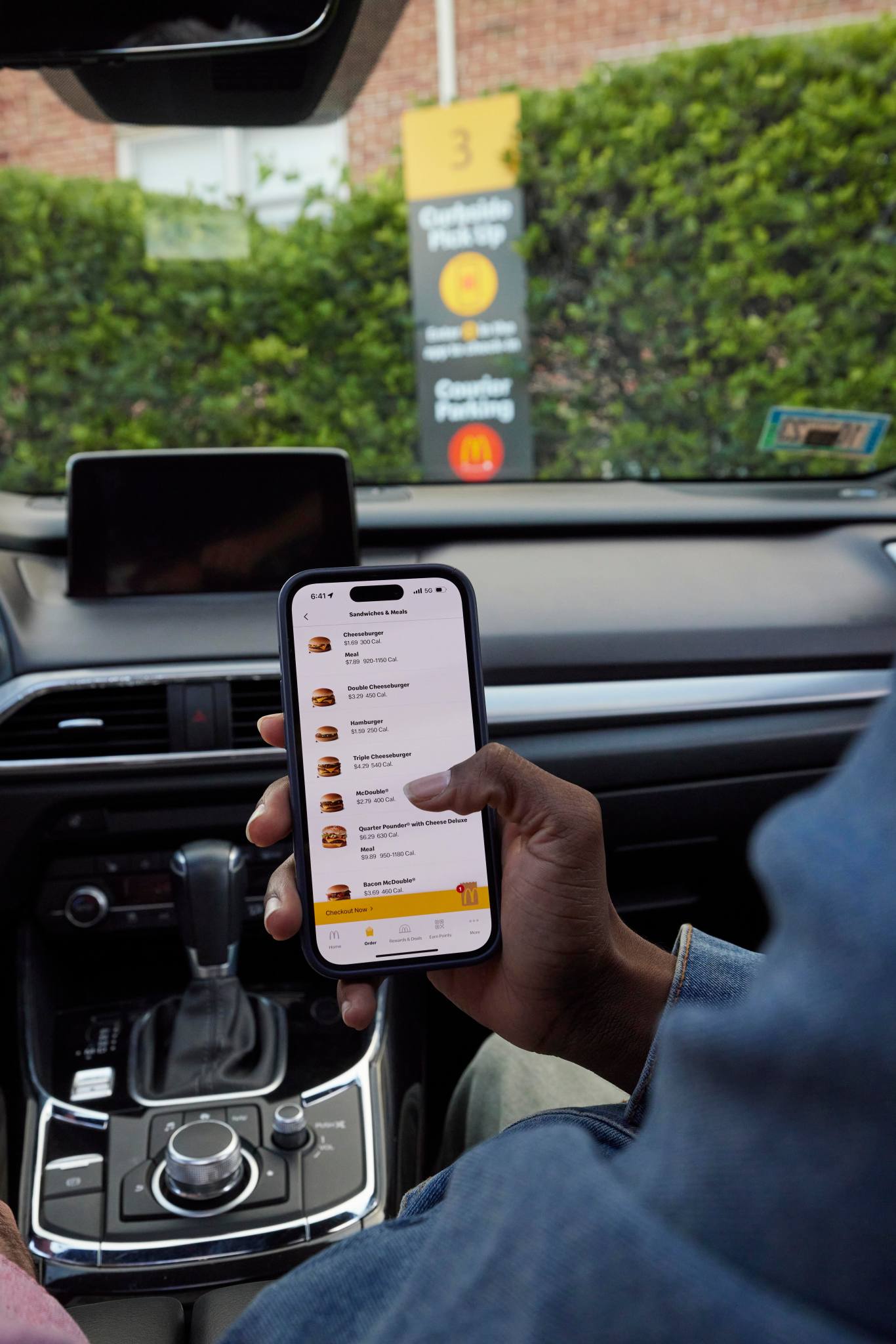
As an experience design lead focused on improving ordering journeys on both in-restaurant McDonald’s kiosks and on the McDonald’s app, my team and I identified an opportunity to improve the “reordering” experience for our digital customer. Through analytics and customer interviews we identified strategies to help customers more easily reorder past meals—unlocking customer benefits and major conversion opportunities for the business.
Business GOAL
Improve ordering time and overall conversion rate on Kiosk and app by making it easier for customers to reorder.
PROBLEM STATEMENT
How might we make reordering on both in-restaurant McDonald’s kiosks and on the McDonald’s app clearer and more convenient?

02 – How often do customers reorder?
USER BEHAVIOR
Through analytics, we saw that customers were leveraging reordering features (Recents & Faves) much less frequently than expected. In fact, over 85% of orders were built from scratch. This was surprising given data we’d received from the menu team indicating that customers in other channels (Drive Thru, Front Counter, etc.) were loyal to their favorite items, and typically cycled between 5-6 of the same menu items across visits.
In assessing the past Recents & Faves sections across 6 months:
- Recents drove only 14.9% of digital orders
- Favorites drove only 1.1%
This disconnect suggested that the design of reordering features—not customer behavior itself—was suppressing usage.

Business Value
From a business perspective, this gap represented a major opportunity. Despite low utilization, we saw that re-orderers were valuable to McDonald’s for a few reasons.
1) Higher conversion: Only 36% of customers who started a new order placed it, versus 77% from re-orderers.
2) Higher ordering frequency: Favorites users ordered 3x more often than non-Favorites users, and Recents users nearly 5x more often.
Knowing this, we wanted to assess why digital reordering—valuable from both a customer and a business perspective—was so underutilized.
03 – What do our customers think about reordering?
An immediate question in addressing reordering flows was whether this feature was valuable to our digital customer at all. Perhaps mobile customers just didn’t have the same ordering patterns as in-person customers? Or maybe digital customers wanted these features, but couldn’t find them? We held onto these hypotheses as a starting point for user interviews.
Generative research across markets
Because McDonald’s is a global business, we sought to conduct customer interviews across several markets. We begin with a survey of the competitive landscape, then moved into unmoderated sessions with users from the United States, Australia, and Germany. We used this step to identify existing navigational barriers and common usability issues.
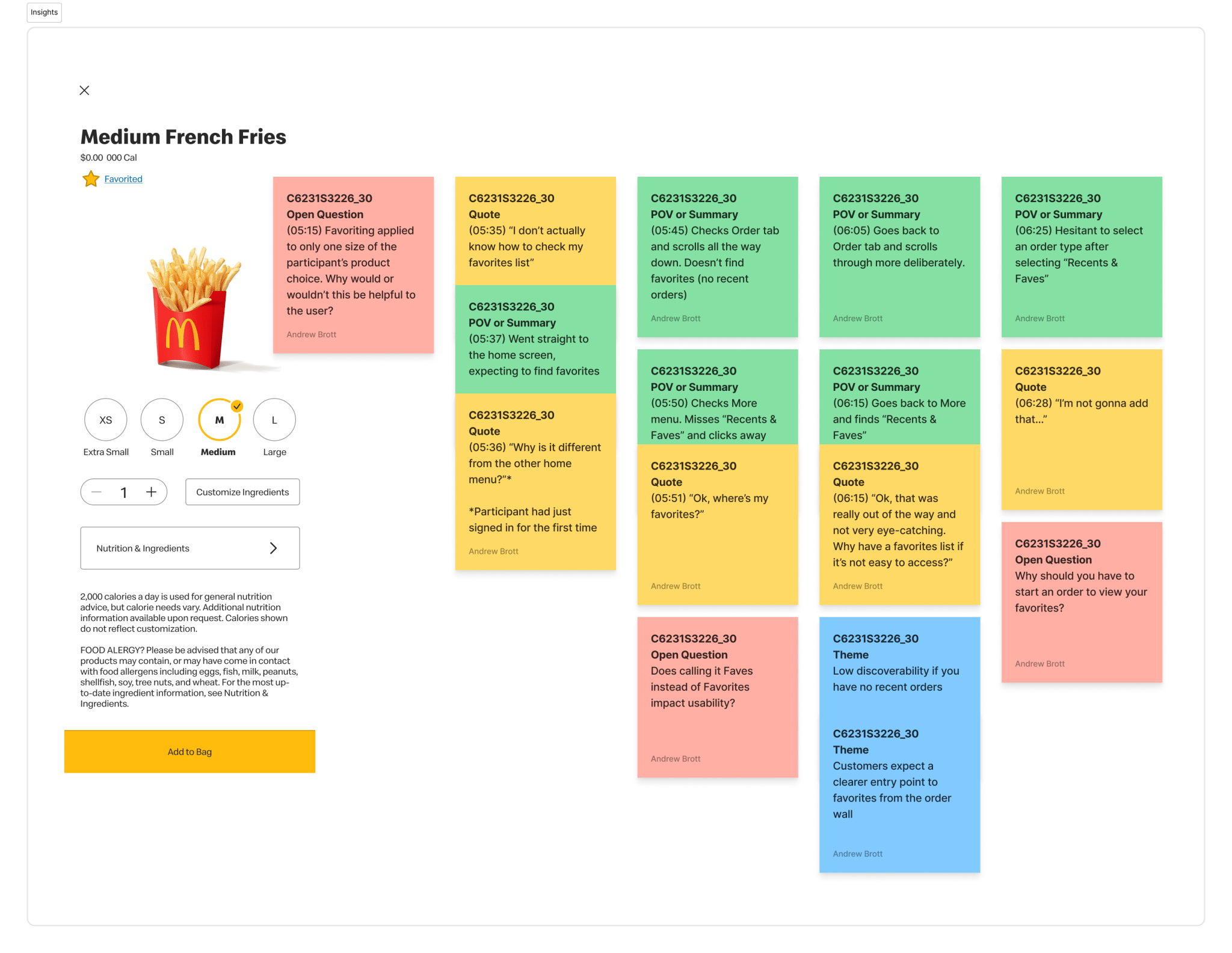
After analyzing these unmoderated sessions, we conducted moderated interviews with a handful of participants to identify specific perspectives and behaviors. We set up 18 hour-long interviews across the United States, Australia, and Germany to better understand the reordering experience from a qualitative perspective.
Discoverability, efficiency, and trust
A few major themes emerged from these interviews:
- Discoverability: Recents & Faves lived behind a section titled “Quickly Reorder” on the McDonald’s Orderwall. It could also be accessed via the More Menu. During interviews, less than half of users found the entry point to the Recents & Faves menu via the Orderwall. When asked, many users first looked elsewhere for an entry point.
- Efficiency: Some UI decisions created a confusing experience. Customers could only reorder from Recents & Faves by whole orders. This didn’t match the real-world mental model for item-based ordering.
- Trust: UX copy for both customizations and product outages left customers confused.
04 – How might we make reordering clearer and more convenient?
Once we had a grasp on why our customers weren’t digitally reordering, we redesigned the experience around interventions that might change this behavior. What would make reordering on the McDonald’s app clearer and more convenient?
Increasing Discoverability
Our redesign moved the entry point to Recents & Faves to a tab bar on the Orderwall, bringing higher visibility to reordering options and improving discoverability.
During user testing, customers quickly located these entry points. We saw a slight improvement in navigation to Recents and a significant improvement in navigation to Faves.
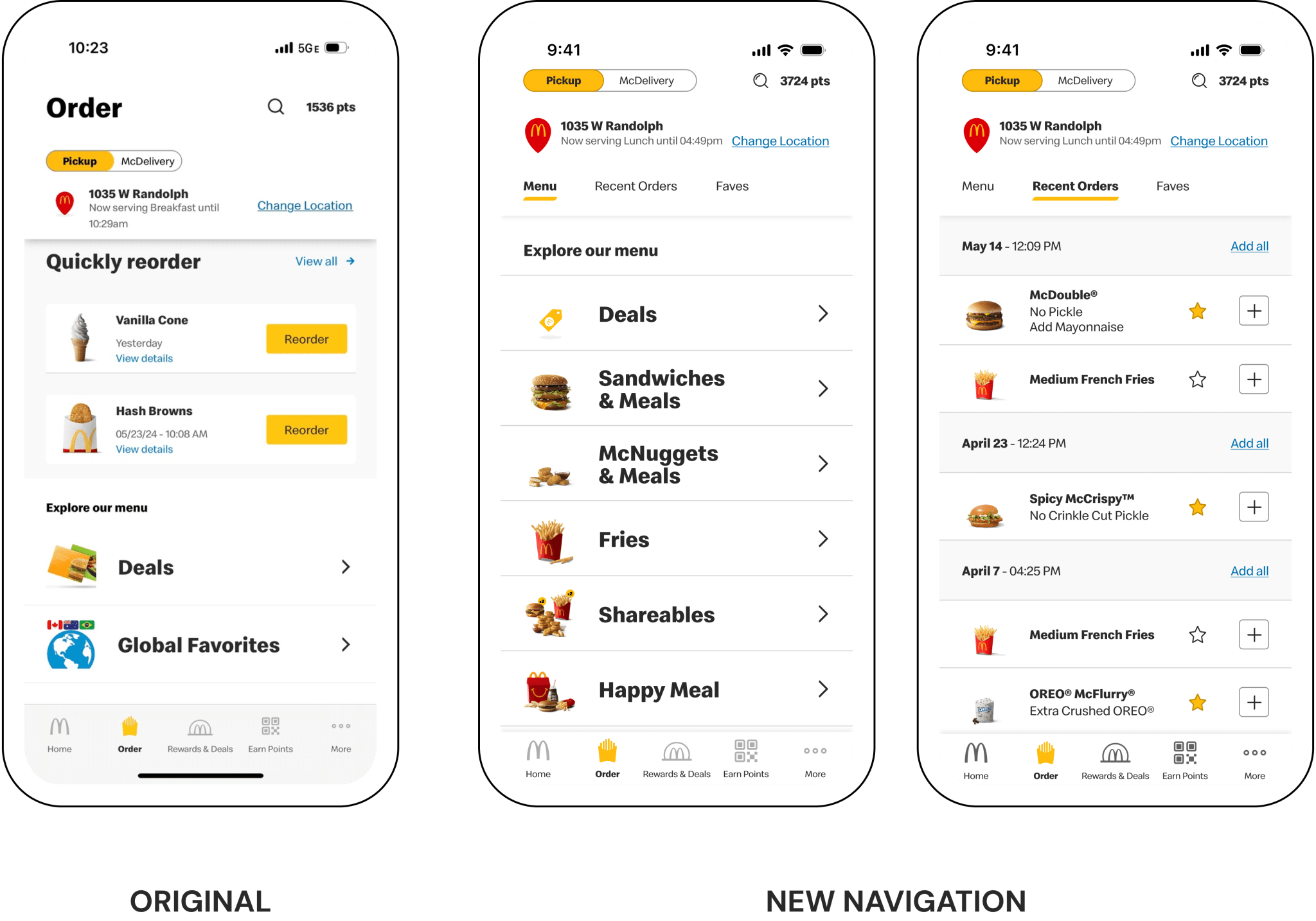
We also removed the entry point from the More menu, seeing from interviews that this allowed for a clearer and more consistent mental model for navigation.
Itemizing recents & faves
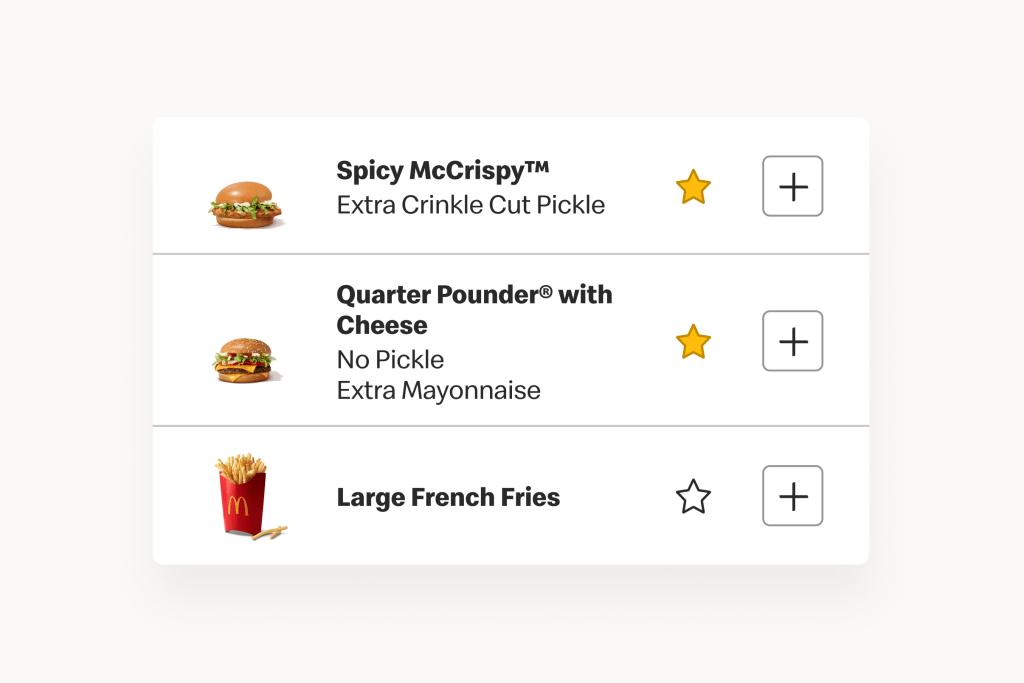
To match customer behavior and expectations, we changed reordering from an action you would make to an entire order to an action made by a la carte menu items.
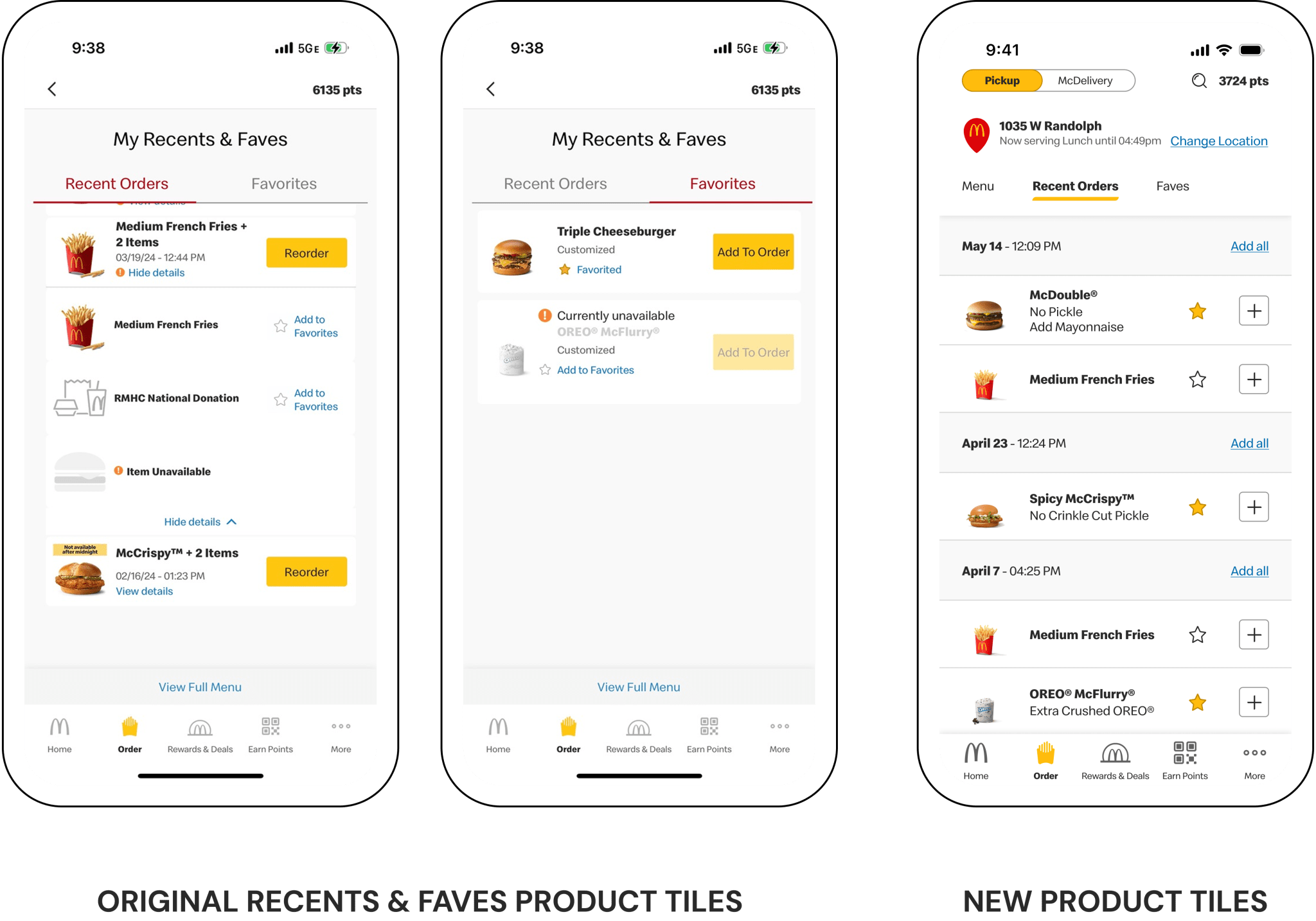
We had seen behavioral evidence from our analytics team of customers preferring to reorder by item. With this change, we saw a marked drop in the share of subsequent cart removals after reordering. When reordering included entire orders, we saw that 51% of customers edited their orders from the cart (3x higher than baseline). When we switched to a la cart, this discrepancy normalized, showing us that customers had more control and more trust in their order.
Consistency across Flows
Favorites product tiles had a distinct UI compared to Recent product tiles. With our proposal, we created a consistent look and feel between the two patterns.
In a similar way, Deals flows (a separate section in the app) didn’t allow for reordering at all. Because over 50% of orders contain at least one item from the Deals menu, we saw an opportunity to incorporate reordering into these flows as well. This allowed customers to more quickly order customized or recently ordered products when an applicable deal had been selected.

Our hypothesis was that aligning frameworks between ordering experiences would reduce cognitive load on users, leading to quicker ordering and less friction.
Kiosk
Insights were translated to our kiosk experience as well. During rounds of usability testing, we assessed design implications for the kiosk, seeking to understand the behavioral differences between mobile orderers and kiosk users. Iterations to reordering flows—from discoverability to product tile rationalization—were kept consistent between experiences.
05 – Final Product


06 – Outcomes
This redesign of the McDonald’s reordering experience created a clearer, more consistent, and more discoverable solution for our customer. By elevating entry points, simplifying product tiles, and aligning UI patterns across Recents & Faves we’ve given digital customers greater clarity and control when reordering. This, in turn, has improved ordering time and overall conversion rate on Kiosk and in the app by making it easier than ever for customers to reorder.
The updated flows launched earlier this year, first in the UK and then in the US. As we deploy these features to additional markets—Canada, Germany, and Australia later this year—we expect these improvements will bring further consistency to digital ordering globally.
While analytics are still being collected, early usability testing and initial market feedback suggest that this redesign meaningfully improves the reordering experience for our digital customer, driving an important segment and increasing conversion rate opportunities. More importantly, the work sets a foundation for future ordering innovations at McDonald’s, helping our digital platforms keep pace with evolving customer needs.